
The regional sales manager for a national apparel chain just finished a tough quarter. Despite a 12% increase in marketing spend on digital ads, in-store traffic was flat, and online conversions dipped by 0.5%. She suspects the problem isn't the ads themselves, but the customer's journey after clicking. The new "style quiz" on their website, meant to personalize recommendations, is seeing a 70% drop-off rate, and the mobile app's loyalty program is confusing to navigate, leading to abandoned carts and frustrated calls to customer service. She knows they need to fix these experiences, but her team is overwhelmed by conflicting priorities, a lack of clear metrics, and a legacy e-commerce platform that feels like it’s held together with duct tape. This is where a focused product strategy comes in: defining a clear path to turn these pain points into cohesive, high-performing digital retail experiences.
Optimizing the Omnichannel Customer Journey
Retailers often operate with a fragmented view of their customer. Online browsing data lives in one system, in-store purchase history in another, and customer service interactions in a third. This makes it nearly impossible to deliver a truly seamless experience, leading to common frustrations like being recommended products already purchased, or receiving generic promotions despite a clear preference history. A product strategy initiative for omnichannel focuses on stitching these disparate data points together to create a unified customer profile.
By first mapping the entire customer journey – from initial brand discovery to post-purchase support – we can pinpoint critical friction points and opportunities for improvement. This might involve integrating a customer data platform (CDP) like Segment or Tealium to unify customer profiles across a headless Shopify storefront, an in-store POS system like Square, and a customer service platform like Zendesk. The goal isn't just data integration, but defining specific product features – like personalized in-app notifications for loyalty members entering a store, or "buy online, pick up in-store" (BOPIS) options presented prominently based on real-time inventory – that leverage this unified view to drive a measurable uplift in customer satisfaction and conversion rates, typically targeting a 5-10% improvement in repeat purchase rates within 12 months.
Enhancing In-Store Digital Experiences
While e-commerce continues to grow, physical stores remain vital. However, many retailers struggle to integrate digital tools effectively into the brick-and-mortar environment, often resulting in clunky kiosks or underutilized associate tablets. The challenge is creating digital experiences that genuinely augment, rather than detract from, the in-person shopping experience, providing value that can't be found online alone.
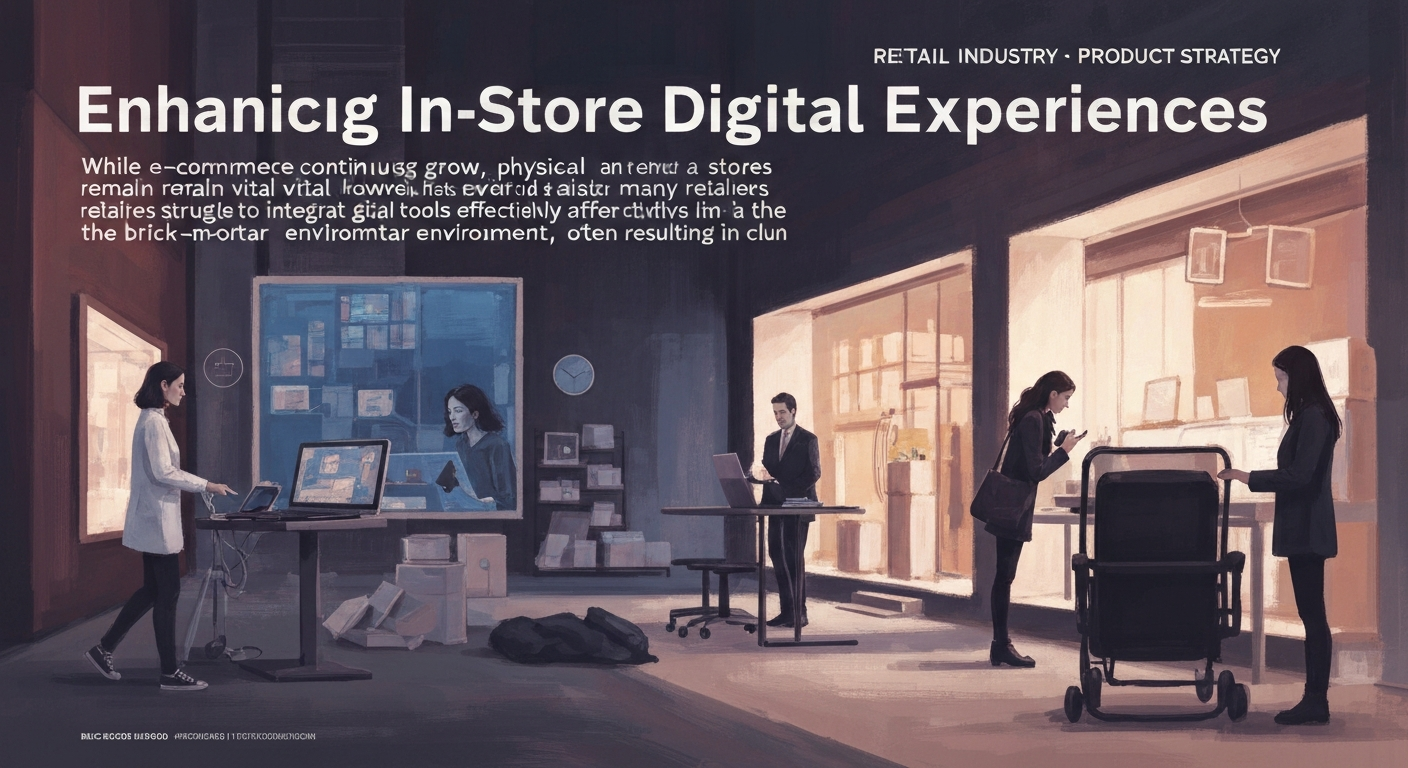
A product strategy here focuses on identifying specific in-store pain points and designing digital solutions that address them. This could mean developing a custom iPad application for sales associates that provides real-time inventory across all store locations, detailed product information, and customer purchase history, allowing them to provide a more informed and personalized service. Another example might be interactive digital signage in fitting rooms that suggests complementary items based on what a customer has brought in, or allows them to request different sizes directly without leaving the room. These initiatives aim to reduce walk-outs due to lack of inventory, improve cross-selling, and increase overall store conversion by 3-7% by making the physical shopping experience more efficient and engaging.
Building AI-Powered Personalization Engines
Generic product recommendations and one-size-fits-all promotions are no longer effective in a competitive retail landscape. Customers expect highly personalized experiences that anticipate their needs and preferences. However, many retailers implement basic recommendation algorithms without a clear strategy for data collection, model training, or continuous improvement, leading to irrelevant suggestions that erode trust and engagement.
A robust product strategy for AI personalization starts with defining the specific business problem to solve, whether it’s reducing bounce rates on product pages, increasing average order value (AOV), or improving customer lifetime value (CLV). This involves identifying and preparing the right data – purchase history, browsing behavior, search queries, and demographic information – to train machine learning models. We might leverage cloud AI services like Google Cloud AI Platform or AWS SageMaker to build custom recommendation engines that suggest products based on collaborative filtering, content-based filtering, or hybrid approaches. The strategy also includes a plan for A/B testing different recommendation algorithms, continuously monitoring their performance against key metrics like click-through rates and conversion rates, and iterating to achieve measurable improvements, such as a 15-20% uplift in recommended product conversions.
Streamlining B2B E-commerce Portals
Many retailers also operate a B2B arm, selling to wholesale clients, distributors, or corporate customers. These B2B portals often lag behind their B2C counterparts in terms of user experience, offering clunky interfaces, limited self-service options, and complex ordering processes. This friction leads to increased operational costs from manual order processing and a poor experience for business customers, impacting repeat orders and client retention.
A product strategy for B2B e-commerce focuses on making the ordering and account management process as efficient and intuitive as possible for business clients. This involves detailed user research with B2B buyers to understand their specific workflows and pain points. Product features might include personalized pricing tiers, bulk order capabilities with streamlined reordering from past purchases, robust account management dashboards for tracking orders and invoices, and integration with enterprise resource planning (ERP) systems like SAP or Oracle for real-time inventory and order status updates. The goal is to reduce the time it takes for B2B customers to place orders by up to 40%, decrease customer service inquiries related to order status by 25%, and ultimately strengthen supplier relationships.
Where to start
Transforming your retail operations through digital products doesn't require overhauling everything at once. The most effective approach begins with identifying your most pressing business challenge or the greatest opportunity for impact. A focused product strategy engagement helps clarify that initial problem, define a clear vision for the solution, and chart a realistic, data-driven path to get there.
- Define the Core Problem: Articulate the single biggest challenge you face in your retail operations that a digital product could address. Is it customer churn, high operational costs, or low conversion rates?
- Validate the Opportunity: Work with a product strategy partner to research and validate the market need and potential impact of addressing this problem. This includes competitive analysis, user interviews, and technical feasibility assessments.
- Roadmap for Impact: Develop a clear, prioritized product roadmap that outlines specific features, technologies, and measurable outcomes, ensuring every step aligns with your overarching business goals.