
Retailers are navigating a complex landscape in 2026. Consumer expectations for personalized experiences and instant gratification continue to rise, while economic pressures demand increased efficiency and cost control. Supply chain volatility, skilled labor shortages, and intensifying competition from both digital natives and established players are squeezing margins across the board. The imperative to integrate online and offline channels into a cohesive customer journey is no longer a differentiator but a baseline requirement for survival and growth.
Technology adoption, particularly in AI and automation, is accelerating as retailers seek to unlock new efficiencies and deliver superior customer experiences. From optimizing inventory levels to personalizing marketing campaigns and streamlining checkout processes, strategic investments in digital infrastructure are proving critical. However, many legacy systems still hinder agility, creating data silos and fragmented operations. The challenge lies in strategically modernizing these systems without disrupting current business processes, leveraging modular architectures and cloud-native solutions to build a flexible and scalable foundation for the future.
Hyper-Personalization at Scale
Moving beyond basic recommendations to truly individualized journeys.
Personalization has evolved past simple "customers who bought this also bought that" suggestions. In 2026, retailers are leveraging advanced AI and machine learning models to create highly individualized customer journeys across all touchpoints. This involves aggregating data from online browsing, in-store purchases, loyalty programs, social media interactions, and even smart home devices. Technologies like Salesforce Einstein, Adobe Sensei, and Google Cloud's Vertex AI are enabling retailers to analyze vast datasets in real-time, predict customer needs, and dynamically adjust product recommendations, pricing, promotions, and even content on websites and mobile apps. The goal is to make every interaction feel bespoke, increasing engagement and conversion rates.

The impact extends beyond conversion. Hyper-personalization is crucial for building lasting customer loyalty and improving customer lifetime value (CLTV). For instance, a customer browsing hiking gear might receive personalized emails about local trail conditions or upcoming outdoor events, rather than generic product ads. This depth of understanding requires robust customer data platforms (CDPs) like Segment or Tealium, which unify fragmented customer data into a single, actionable profile. Retailers are also experimenting with generative AI to create personalized product descriptions or even unique visual content tailored to individual preferences, further enhancing the shopping experience.
What to do this quarter: Audit your existing customer data sources and evaluate CDP solutions. Prioritize unifying customer data from your e-commerce platform (e.g., Shopify Plus), POS system, and loyalty program into a single profile. Begin experimenting with one advanced personalization engine (e.g., Salesforce Einstein Personalization) to power specific use cases, starting with website recommendations.
The Rise of Composable Commerce Architectures
Breaking down monolithic systems for greater agility and flexibility.
Monolithic e-commerce platforms, while offering integrated functionality, often become bottlenecks for innovation. In 2026, many retailers are shifting towards composable commerce, an architectural approach that breaks down the e-commerce stack into independent, best-of-breed components. This strategy allows retailers to select specialized services for specific needs – a headless CMS like Contentful or Strapi for content, a separate search engine like Algolia, a payment gateway like Stripe, and a dedicated order management system (OMS) like Fluent Commerce or Kibo. These services are then integrated via APIs, enabling greater flexibility, faster deployment of new features, and easier scaling.
The move to composable commerce is driven by the need for speed and adaptability in a rapidly changing market. Retailers can iterate on specific parts of their digital experience without impacting the entire system. For example, a new checkout flow can be developed and deployed independently from the product information management (PIM) system. This architectural shift also empowers businesses to create unique customer experiences across diverse channels, including web, mobile apps, social commerce, and even emerging metaverse platforms, without being constrained by the limitations of a single vendor. It's a fundamental change in how digital retail infrastructure is built and managed, prioritizing modularity and interoperability.
What to do this quarter: Evaluate your current e-commerce platform's flexibility and identify areas where a composable approach could offer significant gains (e.g., content management, search, checkout). Research leading headless commerce platforms (e.g., Commercetools, Shopify Hydrogen) and API-first services. Consider a pilot project to re-platform a specific customer journey using a composable approach.
AI-Powered Operational Efficiency
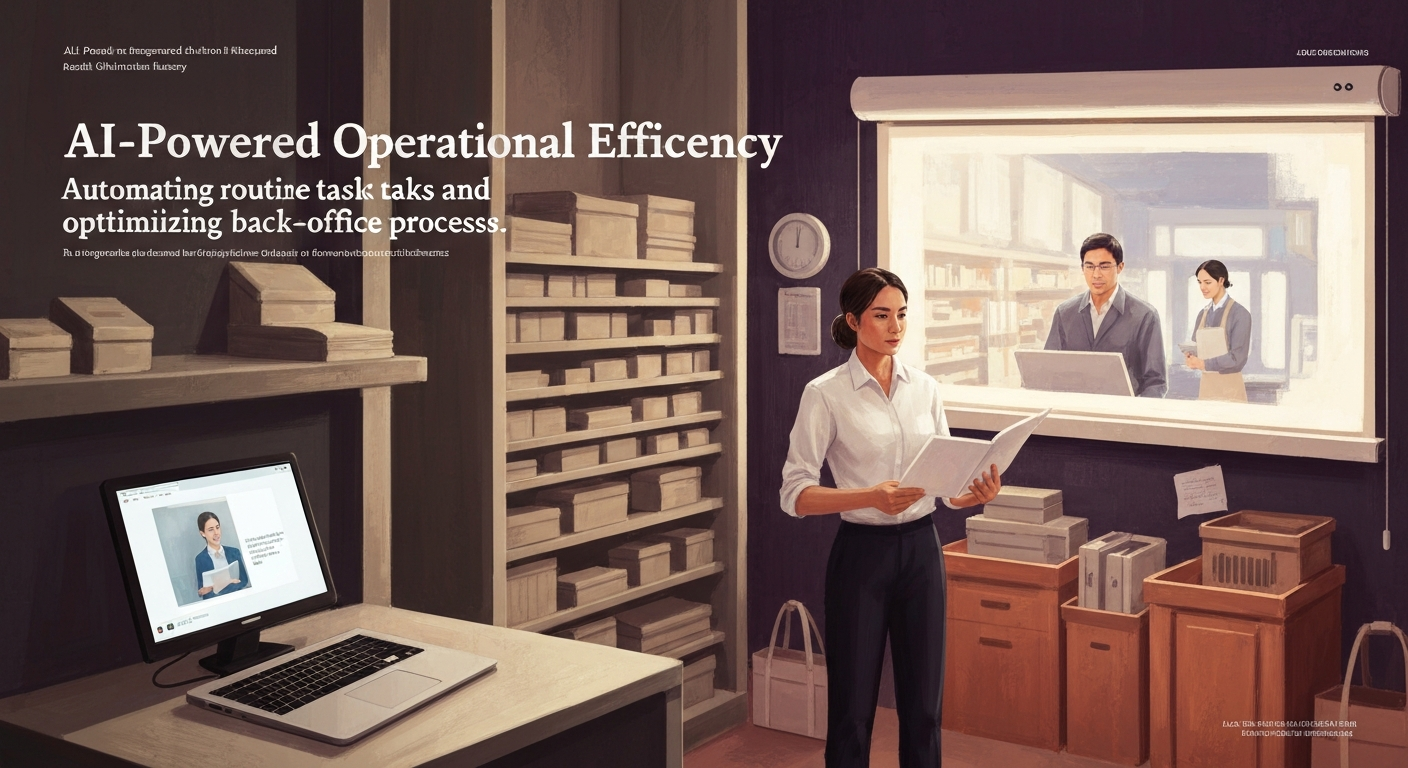
Automating routine tasks and optimizing back-office processes.
AI is no longer just for customer-facing applications; its impact on back-office operations is transforming retail efficiency. In 2026, AI-powered tools are streamlining everything from inventory management and demand forecasting to supply chain logistics and store operations. For instance, platforms like Blue Yonder and RELEX Solutions use machine learning to predict demand with greater accuracy, reducing overstocking and stockouts. Robotic process automation (RPA) tools from vendors like UiPath and Automation Anywhere are automating repetitive administrative tasks, such as invoice processing, data entry, and customer service ticket routing, freeing up human staff for more complex work.
This focus on operational AI is critical for protecting margins in an inflationary environment and offsetting labor shortages. Predictive analytics can optimize shipping routes, minimize waste, and identify potential supply chain disruptions before they occur. In-store, AI vision systems are being used for shelf monitoring, identifying out-of-stock items, and even analyzing customer traffic patterns to optimize store layouts and staffing. The integration of AI across the operational stack allows retailers to make data-driven decisions faster and with greater precision, leading to significant cost savings and improved overall productivity.
What to do this quarter: Identify one specific operational bottleneck (e.g., inventory forecasting accuracy, manual invoice processing) that could benefit from AI or RPA. Research and pilot a solution from a specialized vendor (e.g., Blue Yonder for supply chain, UiPath for RPA) to demonstrate tangible ROI within a confined scope.
Enhanced In-Store Digital Experiences
Blurring the lines between physical and digital shopping.
The physical store is far from dead; it's evolving into an interactive, digitally enhanced experience. In 2026, retailers are integrating digital tools directly into the brick-and-mortar environment to provide convenience, personalization, and entertainment. This includes technologies like smart mirrors offering virtual try-ons (e.g., using AR from ModiFace), interactive digital signage providing dynamic product information and promotions, and mobile apps that enable scan-and-go checkout or personalized in-store navigation. The goal is to leverage the strengths of the physical space – sensory engagement, immediate gratification, and human interaction – while adding the benefits of digital commerce.
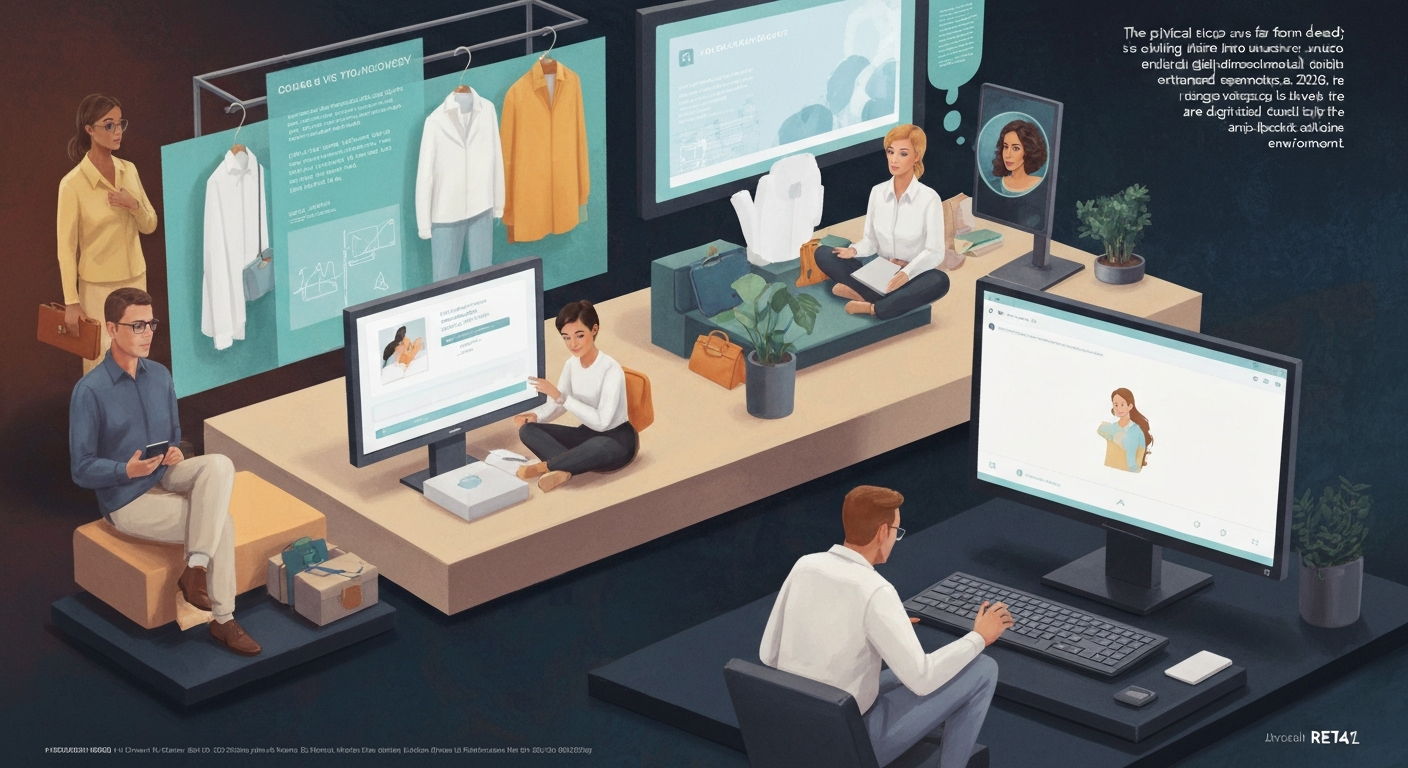
The driver behind this trend is the consumer's expectation for a seamless omnichannel journey. Customers want to browse online, try on in-store, and have items shipped to their home, or vice versa. Retailers are using point-of-sale (POS) systems like Shopify POS or Square for Retail, integrated with their e-commerce platforms and inventory management, to provide real-time stock availability and facilitate endless aisle capabilities. This means if an item isn't in stock in-store, associates can quickly order it for home delivery or pickup at another location, preventing lost sales and enhancing the customer experience. The physical store is becoming an experience hub and a fulfillment micro-center.
What to do this quarter: Select one in-store digital enhancement to pilot, such as interactive digital displays for product information or a mobile app feature for in-store self-checkout. Ensure your POS system is fully integrated with your e-commerce platform to provide real-time inventory visibility and support omnichannel fulfillment options like "buy online, pick up in store" (BOPIS).
Regulatory Scrutiny and Data Privacy Innovations
Navigating evolving data protection laws with privacy-enhancing technologies.
The regulatory landscape around data privacy continues to tighten globally. In 2026, retailers are grappling with stricter enforcement of existing laws like GDPR and CCPA, as well as new regional regulations emerging in territories like Canada (CPPA) and Brazil (LGPD). This necessitates a proactive approach to data governance and a commitment to privacy-by-design principles. Consumers are also increasingly aware and concerned about how their personal data is collected, used, and stored. Retailers face potential fines, reputational damage, and loss of customer trust if they fail to comply.
In response, retailers are investing in privacy-enhancing technologies (PETs) and robust data management frameworks. This includes advanced consent management platforms (CMPs) that give customers granular control over their data, anonymization techniques like differential privacy, and secure data clean rooms for collaborative analytics without sharing raw data. The shift away from third-party cookies, accelerated by browser changes and regulatory pressure, is also pushing retailers to build stronger first-party data strategies. This involves direct engagement with customers to collect data with explicit consent, building trust, and creating more valuable, privacy-compliant personalization capabilities.
What to do this quarter: Conduct a comprehensive audit of your current data collection, storage, and usage practices against all relevant privacy regulations. Implement or upgrade a robust consent management platform (CMP) to ensure clear, auditable customer consent. Begin exploring strategies to reduce reliance on third-party data by strengthening your first-party data collection and activation efforts.
How Hostreck thinks about this
The retail sector in 2026 demands a strategic, integrated approach to technology. Success hinges on building flexible, data-driven platforms that can adapt quickly to market shifts and evolving consumer demands. This often means carefully decoupling monolithic systems, leveraging best-of-breed components, and integrating AI and automation where they deliver tangible value, all while maintaining a relentless focus on customer experience and operational efficiency.