
A regional LTL carrier is battling razor-thin margins. Their dispatchers spend hours each morning manually assigning loads, toggling between spreadsheets, a mapping tool, and phone calls. Drivers, meanwhile, rely on printed manifests, often calling in for updates or directions, burning precious fuel and time. When a truck breaks down, the repair order is handwritten, scanned, and emailed, delaying parts acquisition and increasing downtime. The finance department struggles to reconcile invoices against proof-of-delivery, leading to billing disputes and delayed payments. This patchwork of legacy systems and manual processes creates blind spots, inefficiencies, and ultimately, missed revenue. Digital transformation isn't just about new software; it's about connecting these disparate parts into a single, intelligent operation that can react in real-time, anticipate problems, and optimize every mile.
Real-time Route Optimization and Dynamic Scheduling
Imagine a dispatcher opening a single dashboard, where every available driver, vehicle, and pending load is visible. AI-powered algorithms instantly calculate the most efficient routes, considering traffic, delivery windows, driver hours of service (HOS) regulations like FMCSA's 49 CFR Part 395, and even predicted weather patterns. If an urgent pickup comes in, the system dynamically reroutes the nearest available truck, automatically updating all affected drivers and customers. This isn't theoretical; it’s what modern Transportation Management Systems (TMS) with integrated optimization engines deliver.
This immediate adaptability translates directly to cost savings and improved service. A mid-sized fleet can expect to reduce fuel consumption by 10-15% and cut empty miles by 20-25% through optimized routes. Furthermore, on-time delivery rates improve significantly, often by 15-20 percentage points, bolstering customer satisfaction and retention. Integrating real-time traffic data from sources like Google Maps API or HERE Technologies further refines these routes, ensuring drivers always have the most current information.
Predictive Maintenance and Fleet Management
Keeping a fleet operational is paramount. Historically, maintenance has been reactive – a truck breaks down, then it gets fixed. Digital transformation shifts this to a proactive model. Telematics devices, integrated with the vehicle's engine control unit (ECU), continuously monitor critical parameters like engine temperature, tire pressure, brake wear, and fuel efficiency. This data feeds into a Fleet Management System (FMS) that uses machine learning to predict potential failures before they occur.
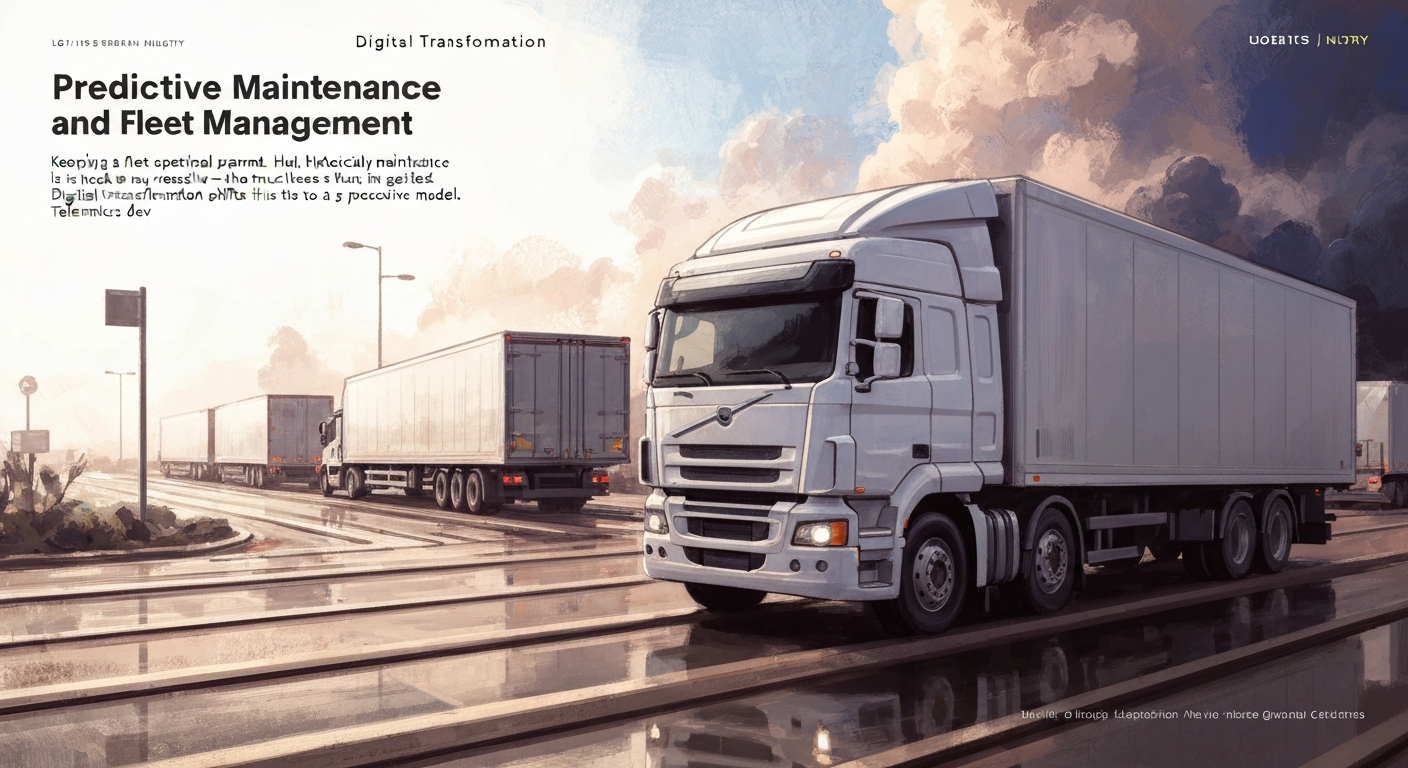
For example, an anomaly in oil pressure readings might trigger an alert for a specific truck, recommending a preventative service before a catastrophic engine failure on the road. This predictive approach minimizes unscheduled downtime, which can cost thousands per day per vehicle. Companies using these systems often see a 20-30% reduction in emergency roadside repairs and a 15% increase in vehicle uptime. Integrating with inventory management for spare parts further streamlines the process, ensuring the right part is available when needed.
Enhanced Warehouse Management and Inventory Visibility
Warehouse operations are the heart of logistics. Manual inventory counts, misplaced goods, and inefficient picking routes lead to significant delays and errors. A modern Warehouse Management System (WMS) centralizes all inventory data, tracking every SKU from inbound receipt to outbound shipment. Utilizing technologies like RFID or barcode scanning, inventory accuracy can reach 99% or higher, eliminating the need for costly annual physical counts.
Beyond tracking, a WMS optimizes warehouse layout and workflow. It can direct pickers along the most efficient paths, group orders for batch picking, and even manage put-away strategies to minimize travel time. For facilities handling diverse products, including those requiring specific storage conditions (e.g., cold chain logistics), the WMS ensures compliance and proper handling. This leads to a 20-30% improvement in picking efficiency and a significant reduction in shipping errors, directly impacting customer satisfaction and operational costs.
Automated Compliance and Documentation
The logistics industry is heavily regulated, from driver HOS to hazmat manifests and customs declarations. Manual compliance processes are not only time-consuming but also prone to human error, leading to fines and delays. Digital transformation automates much of this. Electronic Logging Devices (ELDs) automatically record driver HOS, ensuring compliance with FMCSA regulations and reducing administrative burden.
Furthermore, Electronic Data Interchange (EDI) systems automate the exchange of documents like bills of lading, purchase orders, and invoices between partners. Instead of printing, scanning, and emailing, these documents flow seamlessly, reducing processing time from days to minutes. This automation not only improves compliance and audit readiness but also accelerates the billing cycle and reduces administrative overhead by 25-30%. For international shipments, digital platforms can automatically generate and file customs declarations, streamlining cross-border operations.
Where to start
Embarking on a digital transformation journey in logistics can feel daunting, given the interconnectedness of operations. The key is to begin with a clear understanding of your most pressing operational bottlenecks and the data you already have. Focus on areas where manual processes create significant delays, errors, or regulatory risks. A phased approach, starting with high-impact areas, allows for measurable improvements and builds momentum for further adoption.
- Assess Current State: Identify existing legacy systems, manual processes, and data silos. Pinpoint the top 2-3 pain points causing financial drain or operational inefficiency.
- Define a Roadmap: Prioritize initiatives based on potential ROI and complexity. Start with a foundational system like a modern TMS or WMS, then integrate other solutions.
- Pilot and Scale: Implement a pilot program in a specific region or department, gather feedback, iterate, and then scale successful solutions across the organization.